Discover how Technology & Strategy conducts vehicle testing in complex environments to validate geolocation and autonomous systems using ROS 2, multi-sensor platforms, and real-world field trials.
Field testing, off-road mobile robotics, geolocation in constrained environments, ROS 2: Technology & Strategy supports its industrial clients in validating autonomous systems through vehicle testing campaigns conducted in complex real-world conditions.
In the field of mobile robotics and autonomous vehicles, performance observed in laboratory environments or simulations is not sufficient to guarantee robust operation in real-world conditions. Constrained environments — dense forests, rugged terrain, or areas with degraded GNSS coverage — represent significant challenges for perception and geolocation algorithms.
At Technology & Strategy, we combine the technical expertise, equipment, and field experience required to design and execute vehicle testing campaigns in complex environments, closely aligned with our clients’ industrial use cases.
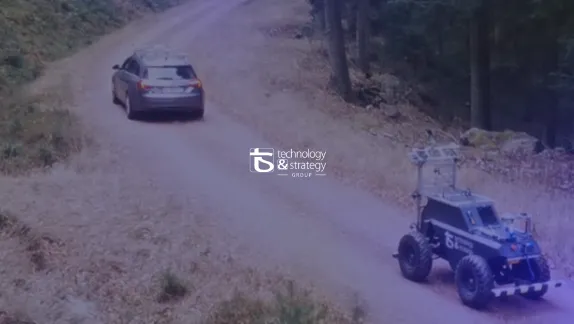
As part of a client project, our off-road mobile robotics teams recently conducted a series of tests in a particularly demanding environment: a forest road located in a mountainous area of the Vosges region in France.
This test site presented numerous constraints representative of real operational scenarios:
The objective of this campaign was to test and characterize the behavior of geolocation systems under real-world conditions, while analyzing the accumulation of positioning errors between several platforms operating simultaneously in the same environment.
For these tests, two vehicles were deployed simultaneously in the field:
Both vehicles were equipped with the same geolocation system. The goal was not to compare different solutions, but rather to analyze the relative behavior of position estimations over time in difficult GNSS propagation conditions.
This approach makes it possible to evaluate error accumulation between vehicles, which is a key challenge for many use cases involving autonomous vehicle fleets or cooperative navigation scenarios.
Beyond sensor instrumentation, both vehicles relied on a complete robotic software architecture.
Each platform embedded dedicated computing units running the ROS 2 middleware, widely used in mobile robotics and autonomous systems. Data exchanges — including localization data, sensor streams, and vehicle states — were handled through the ROS network, enabling real-time and synchronized communication between software nodes and between vehicles.
This architecture facilitated:
Beyond the technical results themselves, this campaign illustrates the overall expertise of Technology & Strategy in conducting vehicle testing in real-world conditions:
This field-oriented approach is essential to validate, qualify, and improve mobile robotics and geolocation systems before their industrial deployment.
Testing in complex environments is a key step in the development of reliable and high-performance autonomous systems. By combining R&D expertise, dedicated testing platforms, and the ability to operate in demanding terrains, Technology & Strategy supports its clients from system design to field validation of their solutions.
These capabilities are particularly relevant for industries operating in constrained or poorly instrumented environments, such as:
Through realistic multi-sensor and multi-vehicle testing campaigns, we help our clients evaluate the robustness of their technologies, identify operational limits, and secure their transition toward real-world deployment.
Are you looking to test your geolocation, perception, or autonomous navigation systems in real-world conditions representative of your operational use cases?
Our teams are ready to support you — from laboratory validation to field testing.



Women in industry, leadership, and diversity: discover how Technology & Strategy drives inclusion and supports women’s careers in the industrial sector.
READ MORE
Strengthen Embedded Linux security with best practices like attack surface reduction, access control, and security by design. Discover how Technology & Strategy helps organizations build resilient, secure systems.
READ MORE.png)
Enhance maritime energy efficiency with advanced electrical machines, drives, and propulsion systems delivering fuel savings and improved vessel performance.
READ MORE
.svg)

.svg)
.svg)
.svg)