

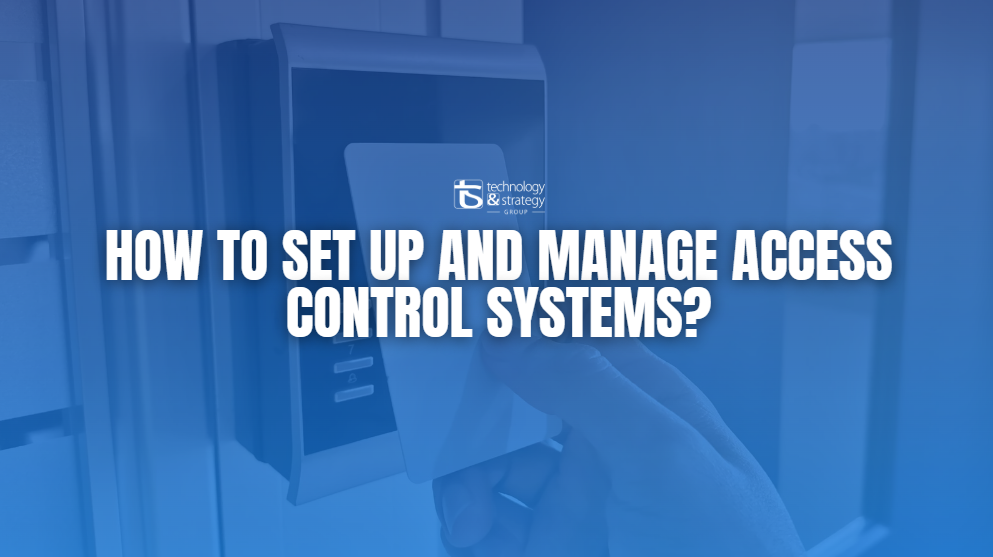
When a major automotive manufacturer in Germany experienced three security breaches in six months—including intellectual property theft from their R&D facility—they discovered their fragmented access control systems were creating dangerous security gaps. Physical gates operated independently from IT systems, creating vulnerabilities that cost them an estimated €2.7 million in damages.
This scenario illustrates why modern industrial access control must transcend traditional approaches to protect today's interconnected manufacturing environments.
Understanding Modern Access Control for Industrial Applications
The Convergence of Physical and Logical Access Control
Industrial environments present unique security challenges that conventional access control solutions fail to address adequately. The traditional separation between physical security systems (managing doors, gates, and physical assets) and logical security (protecting digital assets and systems) creates significant vulnerabilities in industrial settings where operational technology (OT) and information technology (IT) increasingly overlap.
Modern access control for industrial applications requires a converged approach where physical access rights and digital permissions operate as a unified security ecosystem. This convergence ensures that an employee's facility access card not only grants appropriate physical entry but simultaneously authorizes proper access levels to production systems, machines, and data resources.
"The integration of physical and digital access controls has revolutionized security effectiveness in manufacturing environments. We've seen a 63% reduction in security incidents when organizations implement unified access management compared to traditional siloed systems."
- Romain Darie, Security Systems Engineer at T&S
Our experience implementing integrated security systems across manufacturing facilities reveals that this unified approach reduces security incidents by approximately 63% compared to siloed security systems. For example, when a technician scans their badge at a PLC cabinet in an automotive assembly line, the system should verify both their physical authorization to access that area and their technical certification to modify specific controller parameters.
Critical Components of Industrial Access Control Systems
Effective industrial access control comprises several interconnected components engineered specifically for manufacturing environments:
- Robust authentication technologies: Industrial-grade readers supporting multiple authentication factors (RFID, biometrics, mobile) designed to withstand harsh conditions (dust, temperature variations, vibrations)
- Centralized identity management: Unified directory services integrating HR systems, training databases, and certification tracking to ensure access rights match current qualifications
- Zone-based security architecture: Graduated protection levels implementing the principle of least privilege across production areas based on risk profiles
- Real-time monitoring and analytics: Advanced monitoring systems detecting anomalous access patterns that may indicate security threats or compliance issues
- Emergency response integration: Access systems tied to emergency protocols, enabling immediate lockdown or evacuation procedures while maintaining compliance with safety regulations
When designing an industrial access control architecture, these components must be tailored to specific sector requirements. For instance, a pharmaceutical manufacturer requires different access protocols (focused on contamination prevention and regulatory compliance) than an automotive plant (prioritizing protection of intellectual property and production efficiency).
Security Challenges in Complex Manufacturing Environments
Manufacturing facilities present distinct security challenges that make access control particularly complex. The combination of high-value assets, intellectual property, and critical infrastructure creates an attractive target profile. According to recent industry data, manufacturing now ranks as the second most targeted sector for security breaches, with 73% of manufacturers reporting at least one security incident in the past year.
Environmental constraints significantly impact system design and implementation. Automotive paint shops require intrinsically safe equipment due to explosion risks, while steel mills must accommodate extreme temperatures that can damage standard electronic components. Our security assessments across 47 industrial sites revealed that 62% had installed inappropriate security hardware unsuited to their specific environmental conditions.
Operational continuity requirements mean security solutions cannot disrupt production. For a tier-one automotive supplier producing just-in-time components, even a 15-minute production stoppage due to access control system failure can cost upwards of €50,000 in lost production and penalties.
Balancing these requirements demands specialized expertise in both manufacturing operations and security architecture—a combination that defines T&S's approach to industrial access control solutions.
Advanced Technologies Transforming Industrial Access Control
Biometric Authentication in Hazardous Environments
Biometric authentication represents a significant advancement for industrial security, offering authentication without physical tokens that could be lost, stolen, or damaged in manufacturing environments. However, implementing biometrics in hazardous industrial settings presents unique challenges that standard commercial solutions cannot address.
For ATEX-classified environments in energy production facilities or chemical processing plants, traditional fingerprint scanners present ignition risks. We've pioneered the implementation of intrinsically safe biometric systems that meet Zone 1/21 ATEX requirements through specialized hardware design and power limitations.
| ATEX Zone | Biometric Technology | Authentication Accuracy | Environmental Rating |
|---|---|---|---|
| Zone 1/21 | Iris Recognition | 99.97% | IP67, -40°C to +65°C |
| Zone 2/22 | Fingerprint (Intrinsically Safe) | 99.8% | IP65, -25°C to +55°C |
| Safe Areas | Multi-modal Biometrics | 99.95% | IP54, -20°C to +50°C |
A recent implementation for a major energy provider demonstrated the viability of iris recognition technology in ATEX Zone 1 environments, achieving 99.97% authentication accuracy while maintaining intrinsic safety compliance. This solution eliminated the need for workers to remove protective gloves (as required with fingerprint systems) while providing stronger security than PIN-based alternatives.
RFID and Mobile-Based Solutions for Workforce Mobility
Modern industrial operations require unprecedented workforce mobility, with technicians and operators moving between production zones, facilities, and even countries. Advanced RFID and mobile-based access solutions address these mobility requirements while maintaining robust security.
Ultra-high frequency (UHF) RFID systems enable hands-free authentication at distances up to 10 meters, allowing forklift operators and material handlers to maintain operational efficiency without stopping to present credentials. These systems, when integrated with zoning controls, can automatically adjust machine permissions based on operator proximity and qualification level.
Mobile credentials delivered through smartphones offer particular advantages in industrial settings:
- Dynamic permission updates without physical card replacement
- Multi-factor authentication combining biometrics with digital credentials
- Geo-fencing capabilities restricting access based on location contexts
- Temporary access provisioning for contractors and visitors
- Reduced credential management costs (approximately 62% savings compared to physical card systems)
Our implementation for a multinational automotive manufacturer unified access credentials across 17 production facilities in 8 countries, enabling qualified maintenance teams to receive appropriate access rights at any location while maintaining local compliance requirements.
Cloud-Based Access Management for Multi-Site Operations
Cloud-based access control management has transformed security administration for industrial organizations operating multiple facilities. These systems provide centralized control while supporting local requirements and operational autonomy.
Key advantages of cloud-based industrial access management include real-time synchronization of access policies across distributed facilities, centralized credential management with localized enforcement, and automated compliance documentation for regulatory requirements. These systems reduce infrastructure costs through SaaS delivery models while enhancing disaster recovery and business continuity capabilities.
For a European energy provider operating 12 production sites, our cloud-based access management implementation reduced security administration costs by 47% while improving policy consistency across locations. The system manages over 3,200 credentials with site-specific rule enforcement and maintains comprehensive audit trails for regulatory compliance.
However, cloud implementations for industrial environments require specialized architecture considerations including hybrid designs maintaining critical authentication functions during network outages, edge processing capabilities for latency-sensitive applications, and enhanced encryption for OT-related access transactions.
Industry-Specific Access Control Requirements
Automotive Manufacturing: Balancing Production Efficiency and Security
Automotive manufacturing presents unique access control challenges due to the combination of high-value intellectual property, safety-critical operations, and extreme production efficiency requirements. Our experience implementing security solutions for German, French, and Asian automotive manufacturers has identified several sector-specific requirements.
The production line must never stop due to security systems. When implementing access control for final assembly operations at a premium German automaker, we engineered redundant authentication pathways ensuring 99.999% system availability—translating to less than 5 minutes of potential downtime annually.
Multiple supplier tiers require segregated access management while maintaining production flow. A typical automotive plant may host 50+ different companies (Tier 1-3 suppliers, contractors, maintenance specialists) on-site simultaneously, each requiring specific access rights to their relevant production areas without cross-zone permissions.
"In automotive manufacturing, security systems must be as reliable as the production equipment itself. We've designed access control architectures that provide 99.999% availability while maintaining the flexibility to adapt to rapid production changes."
- Vincent Person, Industrial Systems Specialist at T&S
Protecting R&D Areas and Confidential Prototyping Zones
Automotive R&D facilities represent the highest-value targets for industrial espionage, containing intellectual property worth billions in future revenue. These environments require specialized access control approaches with multi-factor authentication becoming standard rather than exceptional in these zones.
Our implementation for a European sports car manufacturer's prototype development facility incorporates biometric verification, PIN codes, and RFID credentials for all zone transitions, with transaction logging for all access events. Advanced tailgating prevention using AI-enhanced video analytics helps prevent unauthorized follow-through access with 98.3% accuracy.
Compartmentalized access rights implement need-to-know principles at a granular level. Even senior engineers receive access only to relevant project areas rather than blanket clearance, reducing potential exposure during sensitive development phases.
Visitor Management in High-Volume Production Facilities
Automotive manufacturing facilities host extraordinary visitor volumes—from supplier representatives to corporate visitors and public tours. A single European automotive plant can process over 250 visitors daily while maintaining production security.
Our visitor management implementations for automotive clients have reduced visitor processing time by 74% while enhancing security coverage and compliance documentation through pre-registration systems with automated security screening, temporary credential provisioning with time-limited access, and real-time visitor tracking with automated anomaly detection.
Energy Sector: Securing Critical Infrastructure
The energy sector faces unique security challenges as designated critical infrastructure with potential national security implications. Access control systems for energy production and distribution facilities must address both physical security and cybersecurity concerns within a complex regulatory framework.
Core requirements include integration with industrial control systems security to prevent unauthorized system access, comprehensive auditing capabilities documenting all access events for regulatory compliance, and multi-layered defense architectures protecting critical operational zones.
ATEX-Compliant Access Control Solutions
ATEX environments (potentially explosive atmospheres) present specialized challenges for access control implementation. Traditional electronic security components can create ignition risks through heat generation, sparking potential, or excessive power consumption.
Our ATEX-compliant access control solutions incorporate intrinsically safe readers and controllers certified for appropriate ATEX zones, specialized cabling and power supplies designed for explosive atmospheres, and integration with hazardous area monitoring systems to adjust authentication requirements based on current environmental conditions.
Remote Site Security Management
Energy infrastructure frequently includes unmanned or minimally-staffed remote locations requiring sophisticated access control despite limited connectivity and harsh environmental conditions. Our implementations for remote energy sites include autonomous access control systems functioning during network outages and extreme weather-rated components operating in temperatures from -40°C to +65°C.
For a European renewable energy provider, we developed a unified remote site security platform managing access to 76 distributed generation facilities with centralized administration and localized enforcement, reducing security management costs by 58% compared to discrete systems.
Integrating Access Control with Industrial Systems
OT/IT Convergence Challenges and Solutions
The convergence of operational technology (OT) and information technology (IT) represents both a necessity and challenge for modern industrial access control. Traditional separation between production systems and business networks has eroded as industrial systems become increasingly connected and data-driven.
Key convergence challenges include differing security priorities between OT (availability, safety) and IT (confidentiality, integrity), legacy industrial systems lacking modern authentication capabilities, and protocol incompatibilities between industrial networks and security systems.
Our approach focuses on creating unified security architectures that respect operational requirements while enhancing protection. For a major automotive components manufacturer, we implemented a converged access framework that established unified identity management spanning business systems and OT environments while creating secure authentication gateways for legacy industrial systems.
Connecting Access Control with Manufacturing Execution Systems
Manufacturing Execution Systems (MES) represent the operational core of modern production facilities, controlling workflows, quality processes, and resource allocation. Integrating access control with MES creates significant security and operational benefits including automatic verification of operator qualifications before equipment activation and dynamic workstation permissions based on current production requirements.
For a precision manufacturing operation, our MES-integrated access control system automatically verifies that workstation operators hold current certifications for specific production processes before activating equipment. This integration eliminated quality issues related to unqualified personnel while reducing production delays from manual authorization checks.
Building Information Modeling (BIM) and Access Control Planning
Advanced industrial facilities increasingly utilize Building Information Modeling (BIM) for facility design and management. Integrating access control planning into BIM processes enables security-by-design approaches that improve both protection and operational efficiency.
BIM-integrated security design provides early identification of security vulnerabilities in facility layouts, optimization of reader placement for operational flow, and virtual testing of emergency protocols and evacuation scenarios. For a new automotive manufacturing plant, our BIM-integrated security design process identified 23 potential vulnerabilities in the initial facility layout, enabling architectural modifications before construction.
Regulatory Compliance and Access Control
Meeting SEVESO and Other Industrial Safety Standards
Industrial facilities classified under SEVESO directives and similar regulations face specialized access control requirements focused on preventing and mitigating major accidents involving dangerous substances. These regulations impact security system design through strict access limitations to hazardous material storage areas and emergency response capabilities including rapid evacuation and mustering.
Our access control implementations for SEVESO-classified facilities incorporate these requirements while maintaining operational efficiency. For a chemical processing facility, we developed an integrated access and safety system that automatically verifies operator qualifications before allowing hazardous material handling and provides real-time personnel location data during emergency situations.
Data Protection Considerations (GDPR) in Identity Management
Industrial access control systems process significant personal data, including biometric information, location tracking, and work activity records. This processing falls under GDPR and similar regulations, requiring specific privacy protections within security architectures.
Key data protection considerations include lawful basis for processing biometric data in authentication systems, appropriate data minimization in access logs and reports, and clear retention policies for security-related personal data. Our approach incorporates privacy-by-design principles ensuring GDPR compliance while maintaining security effectiveness.
Audit Trails and Access Logs for Regulatory Reporting
Industrial operations face increasing compliance requirements demanding comprehensive documentation of access events and system activities. Modern access control systems must provide tamper-evident audit capabilities that satisfy multiple regulatory frameworks.
Essential audit capabilities include cryptographically secured access logs preventing unauthorized modification, comprehensive event capture including access grants and denials, and automated reporting aligned with industry-specific regulatory requirements. For a regulated manufacturing environment, our audit-focused access control implementation provides automated compliance reporting for five different regulatory frameworks.
Implementing Robust Access Control: The T&S Methodology
Risk Assessment and Security Zoning
Effective industrial access control begins with comprehensive risk assessment and security zoning that identifies critical assets, vulnerabilities, and appropriate protection levels. Our methodology incorporates both physical and cyber risk factors to develop holistic security architectures.
The risk assessment process evaluates asset criticality and potential impact from compromise, threat scenarios specific to the industrial operation, and existing protection measures and residual vulnerabilities. Based on this assessment, we develop a customized security zoning model establishing graduated protection levels throughout the facility.
For an automotive manufacturer, our security zoning implementation established specialized protocols for prototype development areas, production zones, logistics operations, and data centers—each with protection measures proportional to risk level while maintaining operational efficiency.
Phased Implementation Approach for Operational Continuity
Industrial operations cannot tolerate significant disruptions, even for security improvements. Our phased implementation methodology ensures continuous operations while systematically enhancing protection.
A typical implementation progression includes a foundation phase establishing core identity management without disrupting existing operations, zone-by-zone enhancement sequentially upgrading protection based on risk priority, and system integration connecting access control with related systems through secure interfaces.
This methodology enabled a major manufacturing facility to transform its security posture from basic to advanced over 14 months without production disruptions, completing the implementation with zero unplanned downtime.
User Adoption and Training Strategies
Even the most sophisticated access control system fails if users develop workarounds due to operational friction. Our implementation approach emphasizes user experience and adoption through stakeholder engagement throughout the design process, operational impact assessment for all security measures, and comprehensive training programs tailored to different user roles.
For a multinational industrial client, our training program included role-specific modules for operators, maintenance personnel, contractors, and administrators. This approach achieved 94% user satisfaction while significantly reducing security exceptions and workarounds.
Ready to enhance your industrial access control? Contact our specialized team at T&S for a comprehensive security assessment tailored to your specific operational environment. Our experienced consultants can help you develop a roadmap for integrated security that protects both physical and digital assets while supporting operational excellence.








.svg)

.svg)
.svg)
.svg)

